Video studio
Uncensored AI Video Editor
“Uncensored” is a search term, not a separate model setting or a guarantee that every request is accepted. Use the available prompt, reference and output controls to express an original idea; the service and selected provider still determine which requests are allowed.

A clearer creative process
More control over your next idea.
Explore the ai video editor workflow, with clear input controls and model-specific limits. Start with one clear intention, then refine the setting, style and output format without losing your place.
Content labels alone do not tell you which prompts a model accepts. Compare actual inputs and policies instead of assuming that every model behaves the same way.
Three steps. Your direction.
A starting point, not a learning curve.
Bring your starting point
Write a brief and select authorized reference media.
Make it your own
Choose a compatible model and review its input limits, ratio and output settings.
Review, then keep creating
Review your inputs and model settings before starting a task. Check the result and refine your brief for the next creation.
Good questions
A few things to know.
What should I know about this search topic?
“Uncensored” is a search term, not a separate model setting or a guarantee that every request is accepted. Use the available prompt, reference and output controls to express an original idea; the service and selected provider still determine which requests are allowed.
What should I prepare for AI Video Editor?
Choose the source video and identify the specific region, object or visual property you want to edit. Model support varies, so review source requirements before deciding whether the workflow fits the task.
How do I choose a model?
Choose by input compatibility and the controls your project needs. Open the model selector to review reference requirements, supported parameters and the available credit rule. A model name alone does not establish that it fits every task.
What determines the cost?
The selected model and output settings determine the credit requirement. Membership and one-time credit packs have different roles. Review the pricing page and the task quote before deciding what to run.
Can I use the output commercially?
Rights depend on your source material, the selected provider’s terms and how you plan to use the result. Use authorized inputs and review the Terms of Service; a tool page does not grant rights to a person’s likeness, music or third-party property.
Go a little deeper
Notes for your next creation.

How to turn a still image into a story
A practical shot-planning guide: choose one movement, protect the subject, and give the camera a reason to move.
Read story
Best AI Image Generator for Your Design Brief
Best AI image generator for your brief? Compare four tools by reference controls, export formats, and the revisions you need before choosing a workflow.
Read story
Give your video a beginning and an ending
Two reference frames can make a transition easier to plan. Here is how to prepare them and avoid impossible motion.
Read storyStart with the right material
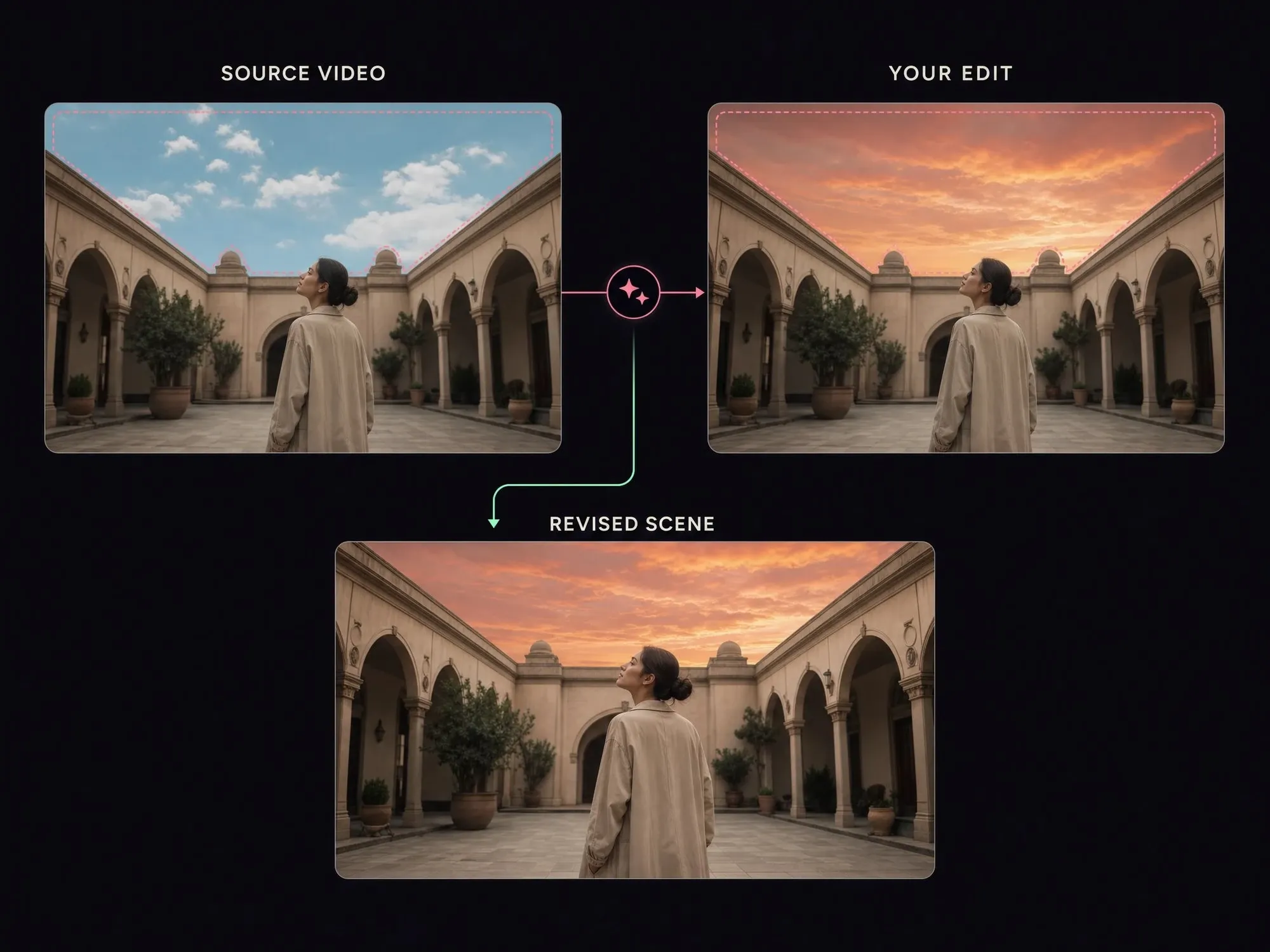
Choose the source video and identify the specific region, object or visual property you want to edit. Model support varies, so review source requirements before deciding whether the workflow fits the task.
Give the model a useful direction
Write one edit at a time. State what changes, where it changes and what must stay unchanged. Replacing a background is a different task from combining clips on a timeline; choose the workflow that matches the actual operation.
Review the details that matter
Replay the entire edited sequence. Check whether the intended change persists, whether untouched areas remain coherent and whether the edit introduces flickering or discontinuities between frames.